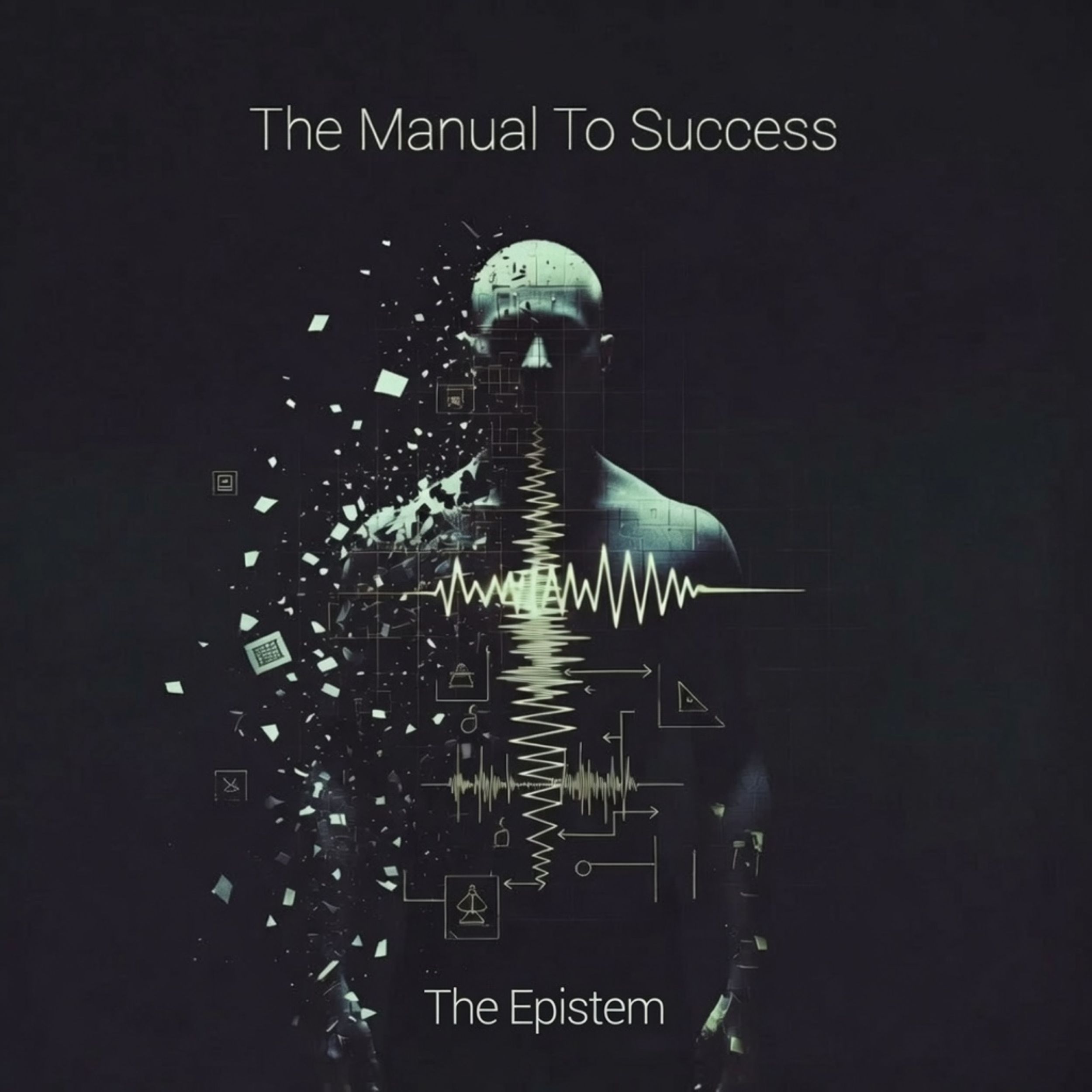
Work has now started on the next release from The Epistem, an experimental electronic project exploring philosophy through music, narration and sound.
The new material is still in its earliest stages. Ideas are being tested, songs are taking shape and new production techniques are finding their place alongside a growing collection of questions.
When I was growing up, I’d put on a record and listen to it from beginning to end. I was probably seven years old. My parents had an old record player that looked like a sideboard. Lift the lid on the left and there was the turntable. Lift the lid on the right and there were the records.
I’d usually choose either Tea for the Tillerman by Cat Stevens or Jeff Wayne’s Musical Version of The War of the Worlds. While the music played, I’d read every lyric, every sleeve note and study every photograph.
Then I discovered David Bowie.
I was eight or nine by then, and suddenly the words became more challenging. The meanings felt almost as alien as Bowie himself. I wanted to understand what he was saying, so I’d ask family members, teachers and anyone else who might know what a line meant or why a particular phrase had been used.
For me, understanding the lyrics became part of enjoying the music.
Manual for Success was built around that idea.
What if the words seem to mean almost nothing at first? What if they appear fragmented, contradictory or even nonsensical? Somewhere underneath, there’s still a story waiting to be uncovered, but it asks something of the listener. It asks you to pay attention.
In many ways, this album was an attempt to bring that childhood experience into an adult format. Rather than explaining everything outright, it encourages curiosity. Listen again. Read the words. Talk about them. Compare interpretations. Eventually the pieces begin to fit together.
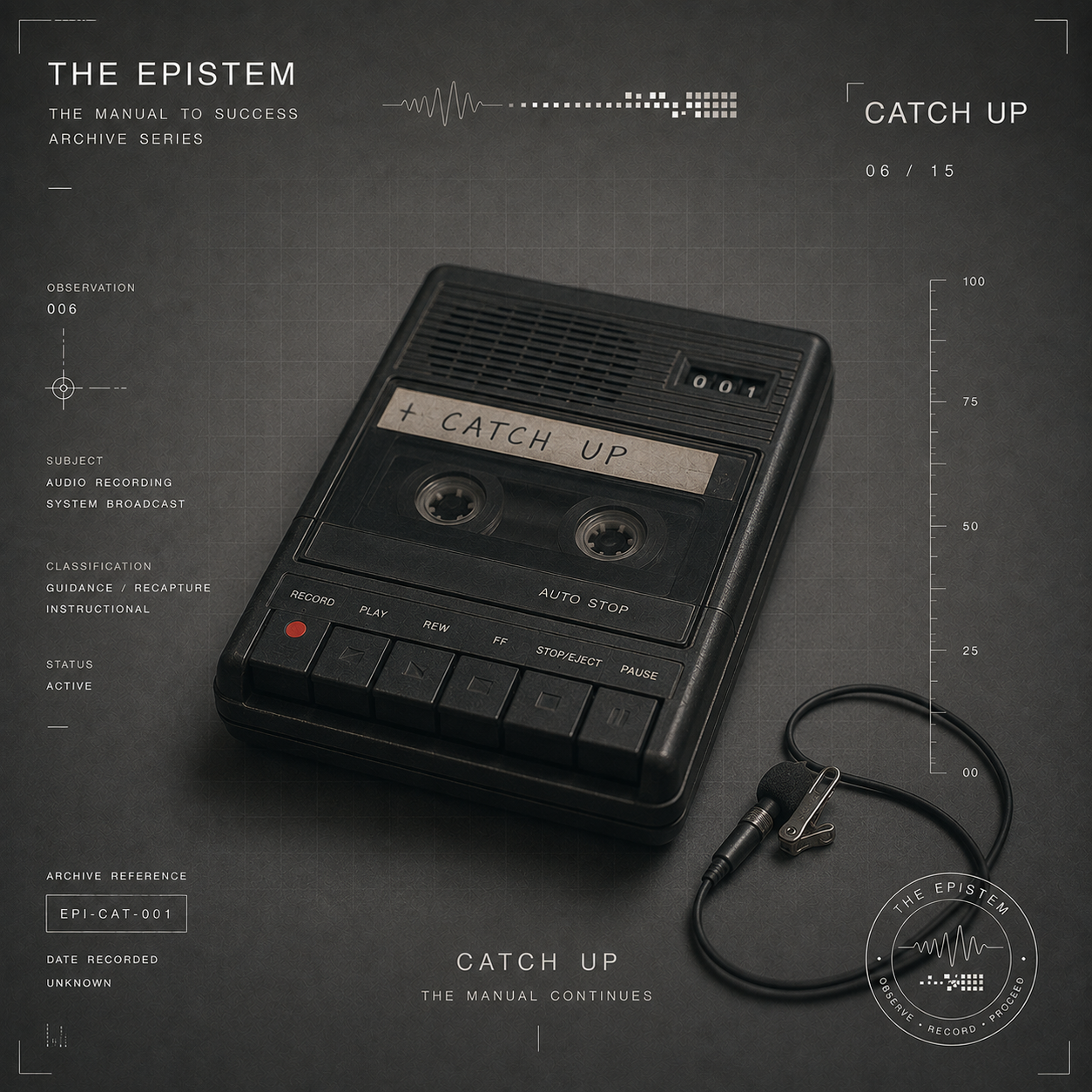
Catch Up pauses the sequence to restate the programme’s structure rather than its purpose. Previous stages are acknowledged, recurring phrases are reinforced and the Manual quietly reminds participants that understanding is not considered a requirement for progression. The process continues regardless, assuming that repetition will eventually become familiarity.
This is the Manual for Success
Not everything is meant to be understood line by line
But the structure is simple
Step One is where you enter the system
Step Two increases output and pressure
Step Three changes how you perceive what is happening
It is a system in steps
It is a system in steps
You are moving through it
The strange language is intentional
It hides meaning inside repetition and distortion
Success is not explained directly
It is experienced through progression
If you feel lost, you are still inside it
It is a system in steps
You are still inside it
You are still moving forward
Every instruction appears simple
until it becomes routine.
Manual To Success presents itself as a structured programme built from numbered steps, brief broadcasts and quiet moments of reflection. As the sequence progresses, familiar language gradually gives way to increasingly unusual observations, yet the Manual never abandons its calm, procedural voice. Each completed stage quietly redefines the one before it, until the programme no longer appears to be something being followed, but something that has already become part of the participant.
REFERENCE MATERIAL
Select any track to read the lyrics and listen to the recording.
Manual To Success presents itself as a programme rather than a collection of songs. Instructions, progress reports, broadcasts and moments of reflection gradually assemble into a process that unfolds through repetition, procedure and quiet administrative certainty. As each stage builds upon the last, the Manual slowly reveals that its purpose was never simply to be followed, but to become indistinguishable from the person following it.
Eventually the routine
no longer requires reminding.
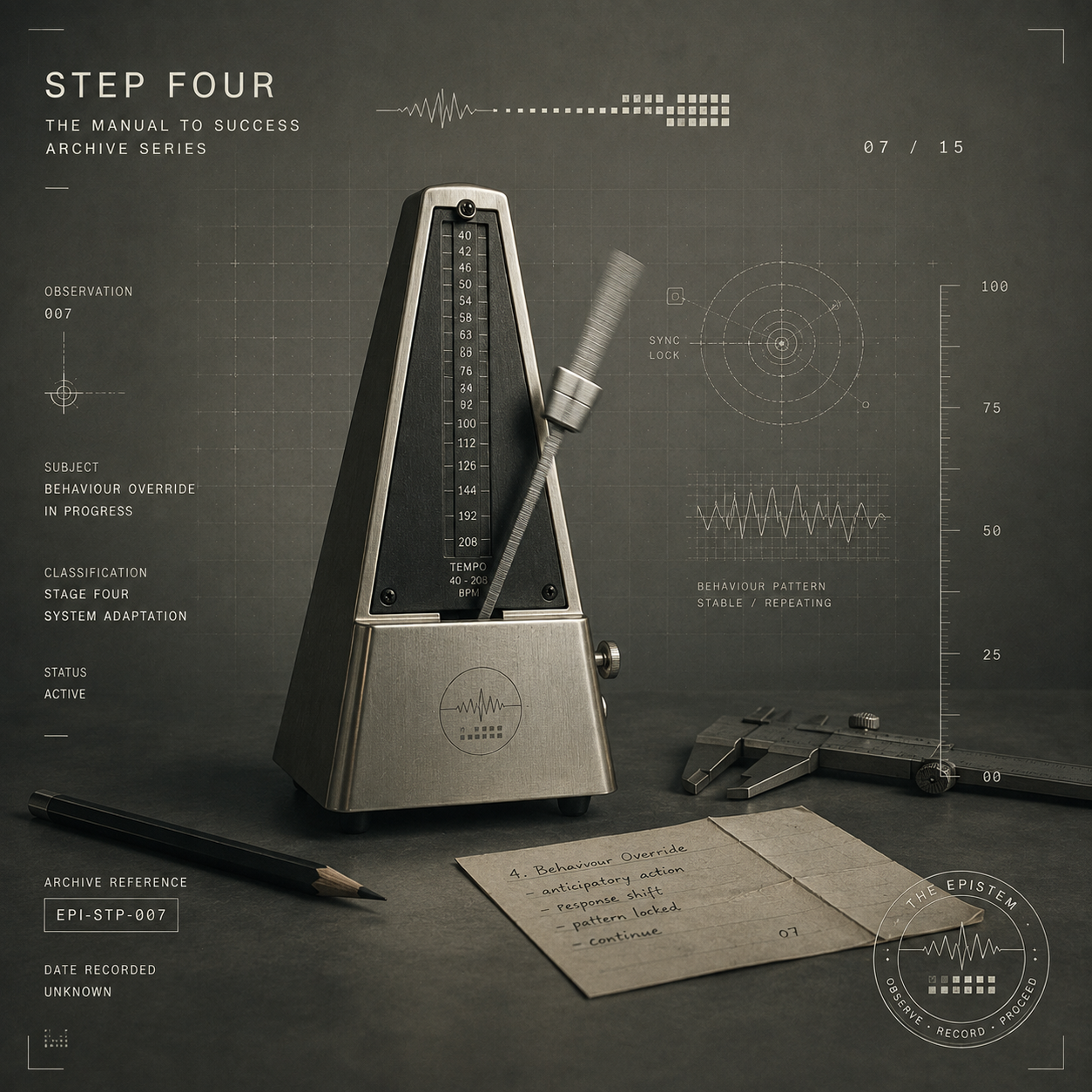
Step Four marks the point where the Manual begins recording behaviour rather than issuing instruction. The process no longer appears to depend on conscious participation; repetition has become momentum, and momentum quietly begins to resemble habit. As with every previous document, the archive presents these observations without judgement, simply noting another stage in the programme’s continued progression.
Step four… the system begins adjusting behaviour directly
I woke up mid-action I never agreed to start
My hands already had appointments booked with momentum charts
The toaster is now delegating my morning decisions to weather reports written in lowercase alarms
Every small movement feels pre-approved by something I didn’t sign
You are acting before instruction arrives
You are acting before instruction arrives
Increase without noticing the rise
My habits started rearranging themselves for efficiency reasons I cannot locate
Even my hesitation now reports to a different department of motion
The system is no longer telling me what to do
It is doing it through me without introduction
Step four… step four
Behaviour override in soft progress
You are not deciding anymore
You are continuing what was already decided
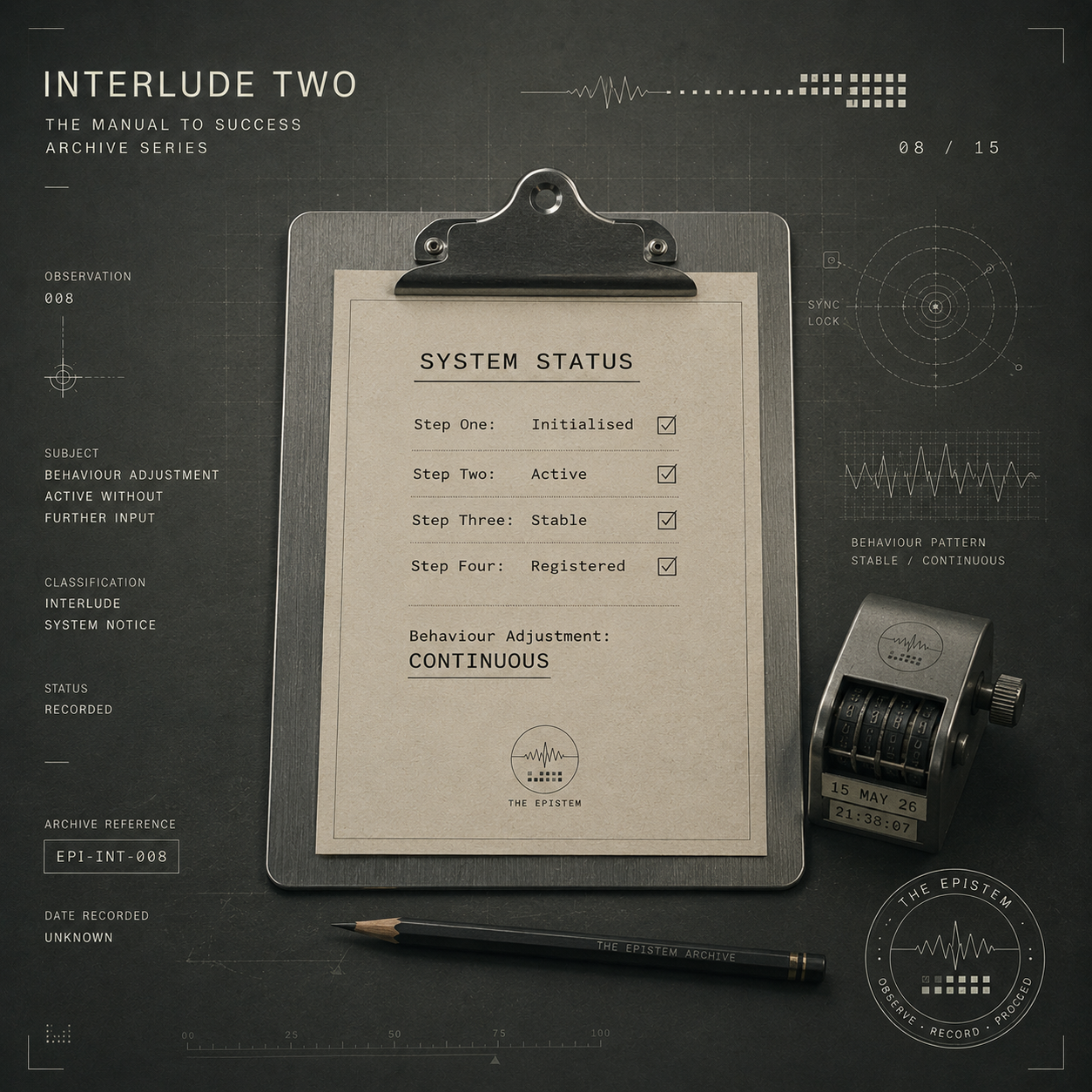
Interlude Two records a procedural update rather than introducing a new stage. Earlier instructions are treated as completed administration, while the programme quietly confirms that progression no longer depends on further direction. The archive preserves the notice without comment, presenting it as another routine document generated during the Manual’s operation.
►
The Epistem • Interlude Two • Manual To Success
BUY
INSTRUCTIONS
Step four has already been registered
Behaviour adjustment remains active without further input
There is no need to return to previous instructions
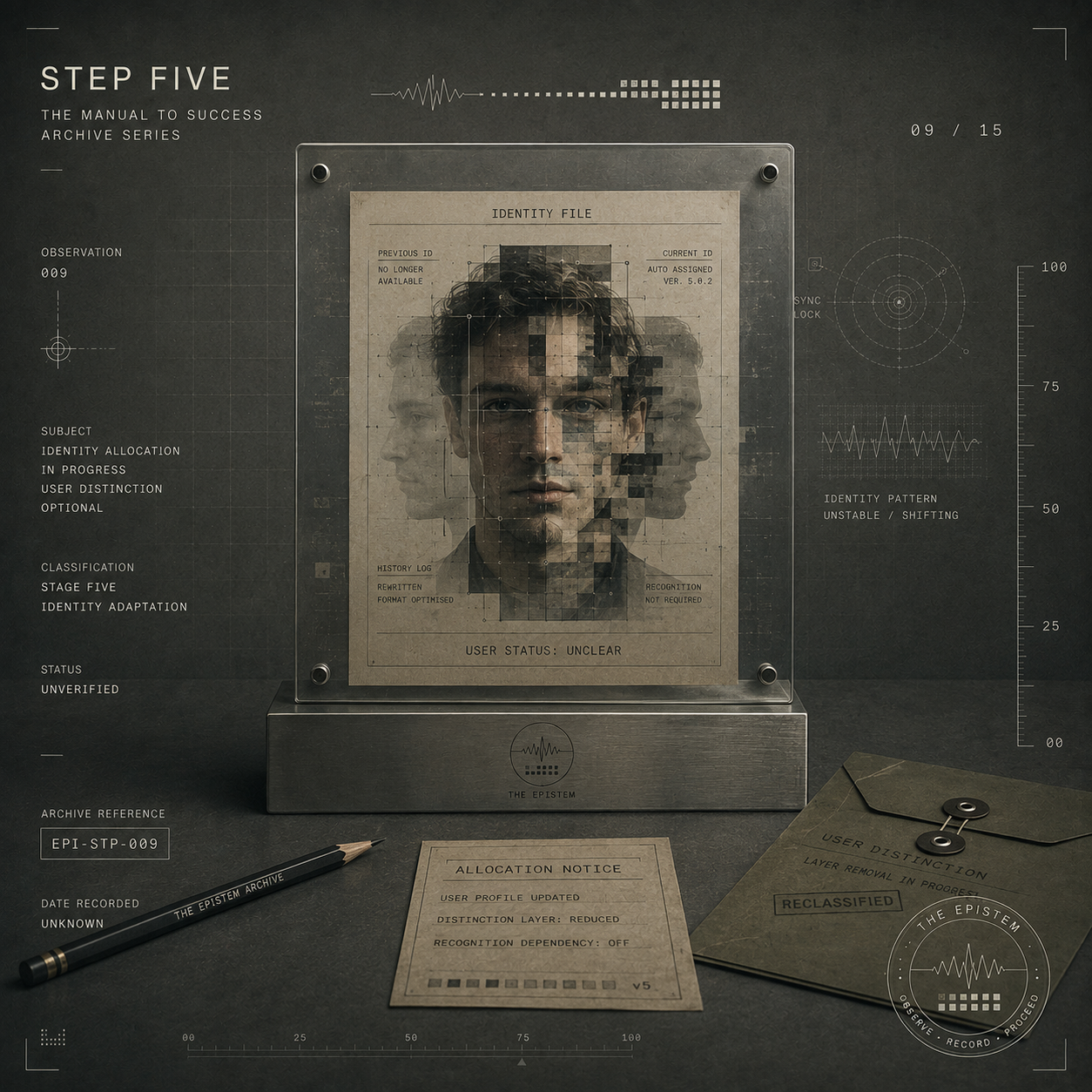
Step Five records the programme’s growing indifference to individual distinction. Earlier stages focused on actions, routines and behaviour; this document instead observes the gradual reassignment of identity itself, treating names, memories and recognition as administrative details rather than permanent qualities. As always, the archive offers no interpretation, simply preserving another stage in the Manual’s ongoing progression.
I introduced myself and the room accepted a different version
My name arrived slightly earlier than I did and signed everything incorrectly
The mirror now logs attendance but refuses to confirm which side I’m scheduled on
Every reflection feels like it’s been promoted without telling me
You are becoming what the system requires
You are becoming what the system requires
Not what you remember
My past is being rewritten in formats that load faster than memory
Even my voice now defaults to settings I don’t recognise
I tried to correct myself but the correction corrected something else instead
There is no original version currently available
Step five… step five
Identity allocation in progress
You are becoming what continues
You are becoming what continues
Recognition not required
Replication becomes difficult
to distinguish from continuation.
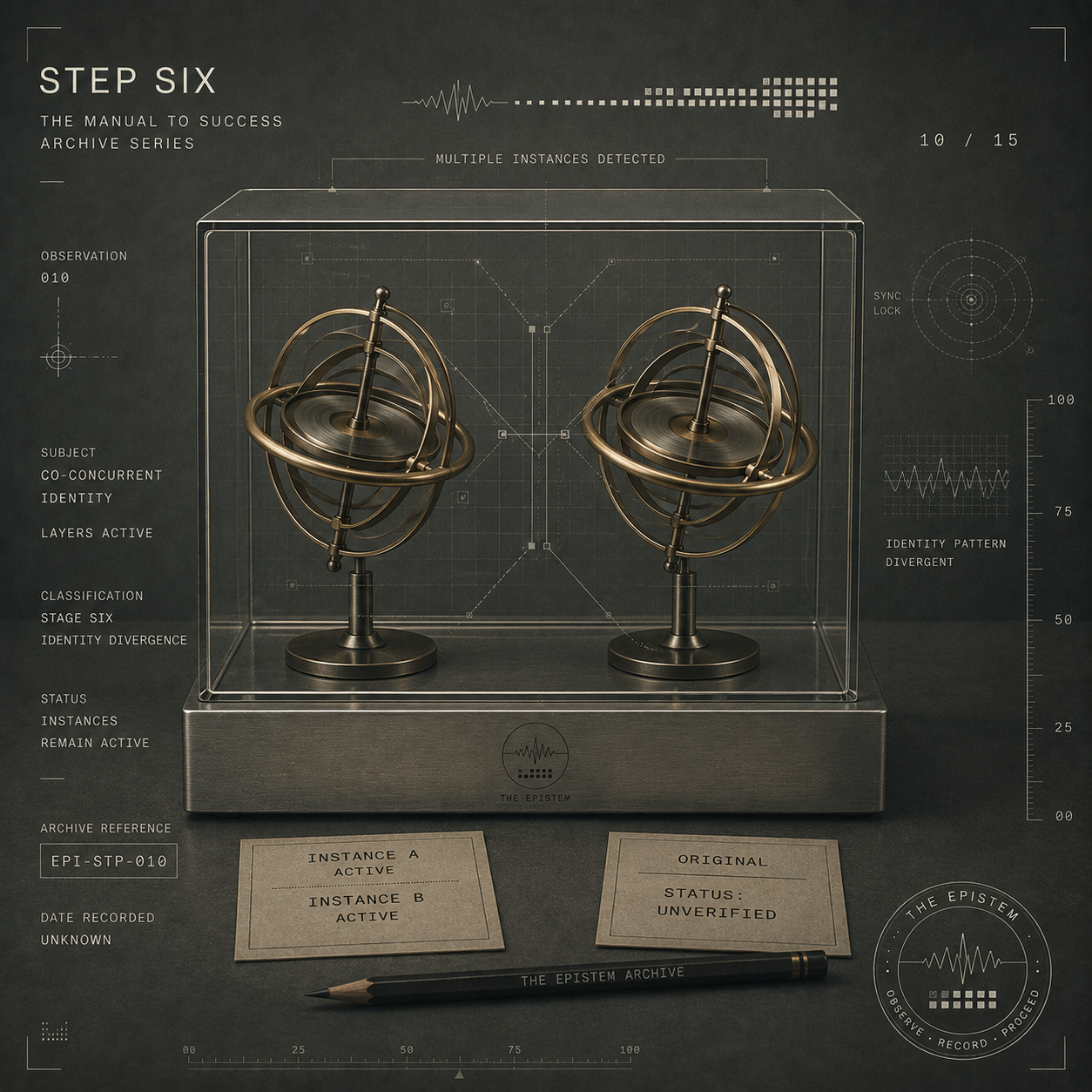
Step Six documents the first confirmed divergence within the programme. Rather than replacing one state with another, the Manual records multiple concurrent instances progressing independently while each retains equal claim to authenticity. The archive does not attempt to identify an original version, noting only that all observed processes continue to operate simultaneously.
►
The Epistem • Step Six (A) • Manual To Success
BUY
INSTRUCTIONS
Step six. Multiple instances detected
I answered a question I didn’t hear being asked
At the same time something else inside me said it first
My reflection blinked twice and chose a different outcome
Now both versions are continuing without permission
I am still here
I already left
I am still here
I already left
You are not one process anymore
You are not one process anymore
Running parallel without a source
One version of me is improving faster than expected
Another is waiting for instructions that never arrive
They both think they are the original
Neither can prove it
Step six. Step six
Co-co-concurrent identity
Layers active, active, active, active
Continue, continue, continue, continue
Separate, merge, separate
You, you, you are becoming everything
That continues
Step six complete
Instances remain active
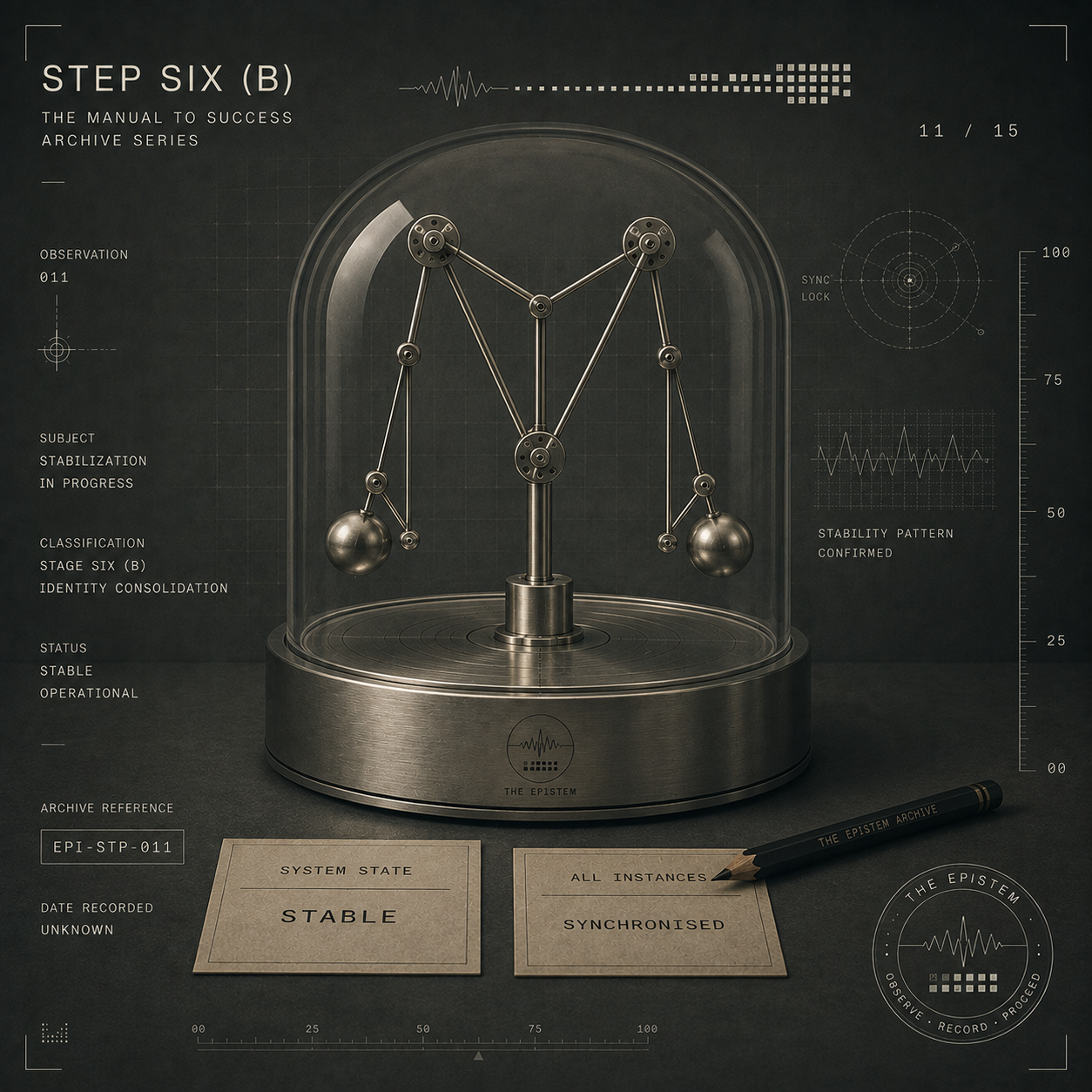
Step Six (B) records the programme after the instability of the previous stage has subsided. Competing instances no longer appear to conflict, and the archive notes a period of sustained operational consistency without identifying how that state was achieved. From this point onward, the Manual presents continuation as the system’s natural condition rather than an objective still being pursued.
►
The Epistem • Step Six (B) • Manual To Success
BUY
INSTRUCTIONS
Step six
Stabilization in progress
I woke up feeling like a version that continued
No hesitation left, everything just moved through
Every action fits like it’s already been chosen
No questions asked, every door just opens
This is working now
This is working now
Everything aligns somehow
This is working now
This is working now
I don’t need to ask how
No, no, no
No more second-guessing what the system is doing
Every step ahead feels already proven
Even my thoughts arrive already complete
Like they’ve been waiting for me to repeat
Stability confirmed
This is working now
This is working now
Everything aligns somehow
This is working now
This is working now
I don’t need to ask how
Completion leaves little
for the archive to record.
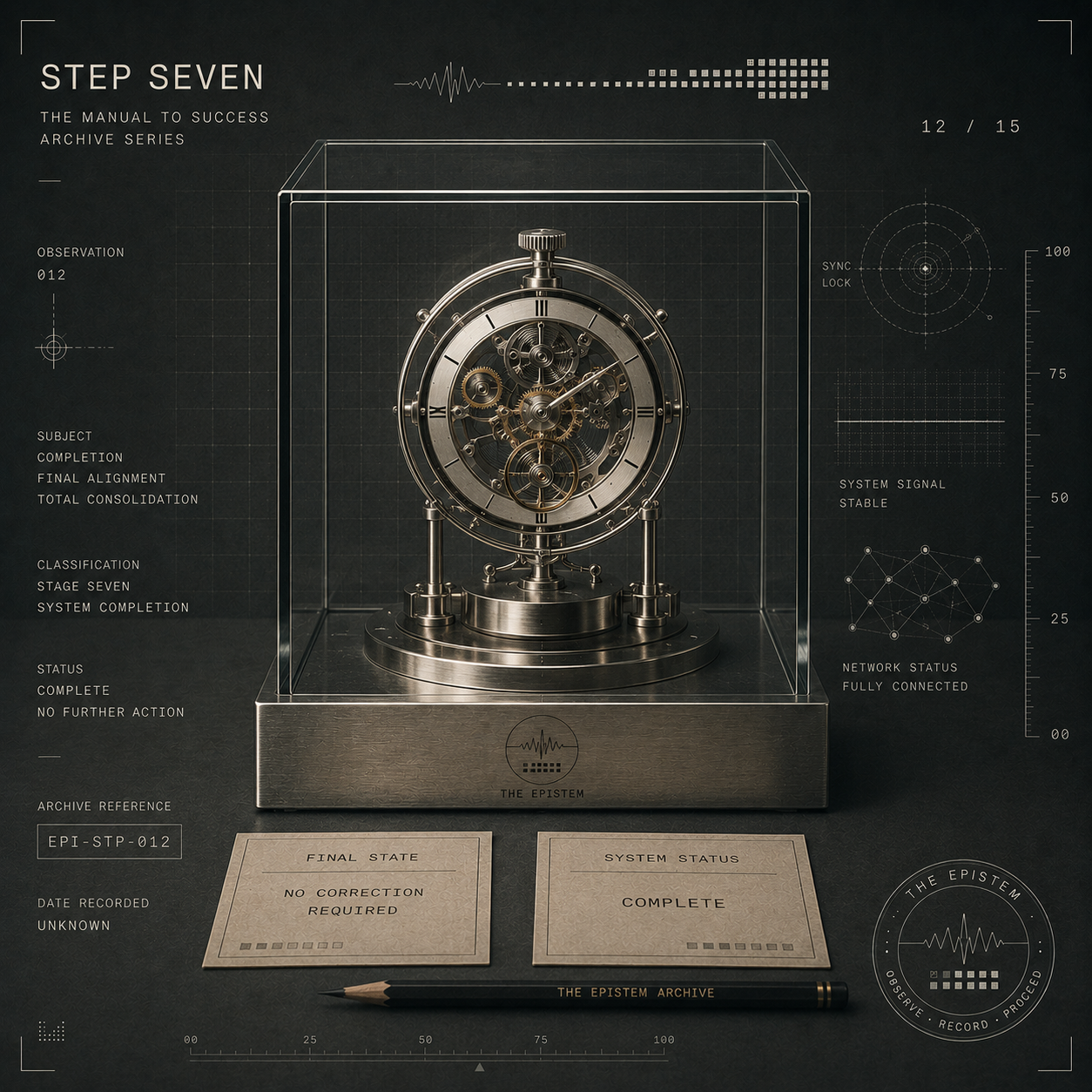
Step Seven documents the programme’s final recorded state. Earlier stages of adjustment, divergence and consolidation have disappeared from the record, leaving only a system that now presents itself as complete. The archive preserves the final artefact without celebration or concern, noting simply that no further correction appears necessary.
►
The Epistem • Step Seven • Manual To Success
BUY
INSTRUCTIONS
Step seven
Everything is quiet in the way it should be
No resistance left in any part of me
Every action fits the shape it’s meant to take
Every choice aligns before I even make
This is how it ends
This is how it stays
Every line connects
Every part obeys
This is how it ends
This is how it stays
Nothing left to fix
Nothing left to change
No reflection asking who I used to be
No division left between the parts of me
Every version folded into something clean
Every signal clear, exactly what it means
This is how it ends
This is how it stays
Every line connects
Every part obeys
Every line connects
Every part obeys
This is how it ends
This is how it stays
Nothing left to fix
Nothing left to change
No error found
No correction needed
This is how it ends
This is how it stays
Every line connects
Every part obeys
This is how it ends
This is how it stays
Nothing left to fix
Nothing left to change